Ono Grindz 808
Sweets & Baked

Andagi

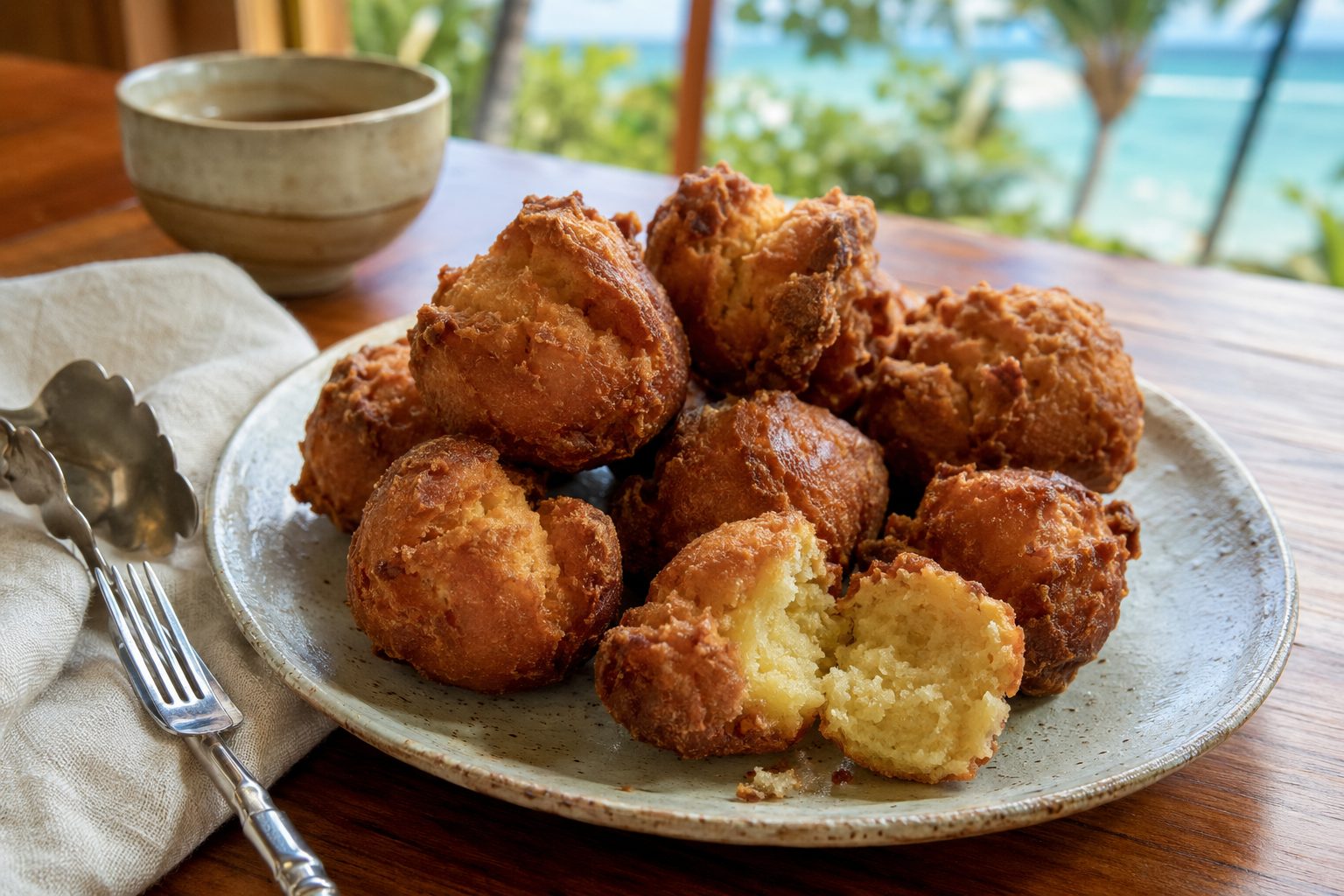
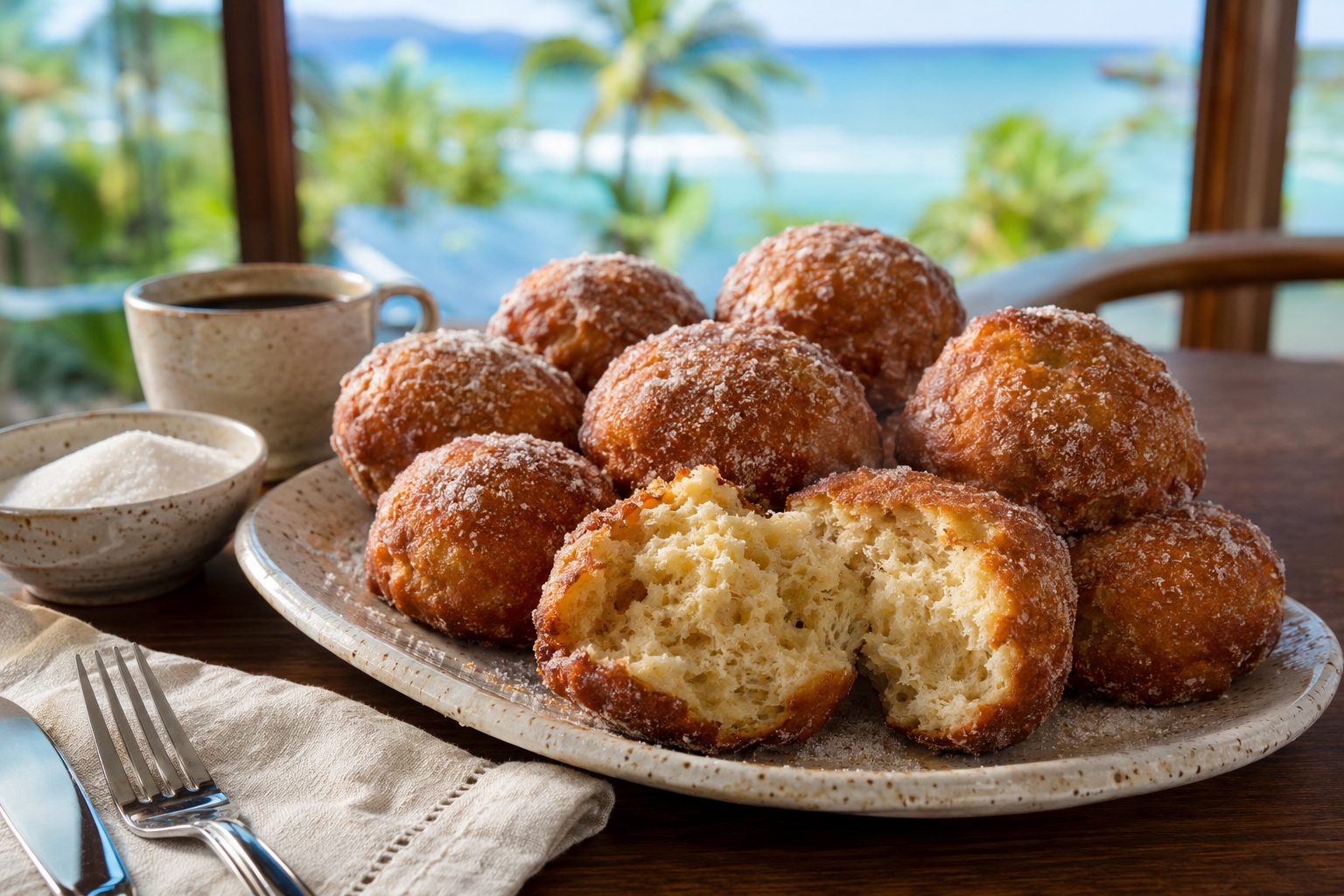
Okinawan fried dough balls — denser and less sweet than a malasada, with a deeply toasted crust.

Andagi
Prep20 min + 20 min rest
Cook20 min
Total1 hr
Servesabout 20 pieces

Andagi came to Hawai'i with Okinawan immigrants and stayed a fixture at bon dance festivals every summer — dense, cake-like dough balls fried until the outside turns a deep, toasty brown, sold by the bag at festival food stands faster than anyone can fry them.

Unlike a malasada, andagi dough is meant to be firm and only lightly sweet on its own — it's built to be eaten plain, still warm from the fryer, no sugar coating required (though nobody will stop you).
How fo’ make ’um

  1. Whisk the flour, sugar, baking powder, and salt together in a large bowl.
  2. In a separate bowl, beat the eggs, then whisk in the milk, melted butter, and vanilla.
  3. Pour the wet ingredients into the dry and stir just until a thick, slightly sticky dough forms — don't overmix. Cover and rest 20 minutes.
  4. Heat about 3 inches of oil in a deep pot to 325°F — lower than most frying, since andagi needs time to cook through without the outside burning.
  5. Using two spoons or a small ice cream scoop, drop rounded balls of dough into the oil a few at a time. They'll sink, then rise as they cook.
  6. Fry 5–7 minutes, turning occasionally, until deeply browned all over and cooked through in the center (test one by splitting it open). Drain briefly and serve warm.

Local tips

  • Keep the oil temperature honest with a thermometer — andagi needs the lower, slower heat to cook through before the crust over-darkens.
  • The dough should be thick enough to hold its shape when scooped, not pourable — add a touch more flour if it's too loose.
  • Leftover andagi reheat well in a toaster oven, which re-crisps the crust better than a microwave.

Keep grinding

More liddis

← All recipes